Best practices for meeting Canadian municipal wastewater regulations
Are you looking for technical information and examples of best practices to help you with your municipality's wastewater treatment initiative?
We have developed case studies to help Canadian cities and towns of all sizes meet the wastewater regulations introduced by the federal government.
The case studies provide valuable information that you can apply to your own wastewater treatment plant projects and upgrades. They include technical information, project details, tips on best practices and the significant benefits gained by community members.
Read the case studies to learn the steps you can take to:
Upgrade, retrofit or replace your wastewater treatment system.
Increase capacity and extend the service life of your wastewater treatment plant.
Improve wastewater quality, reduce odour levels and eliminate chemical residues.
Learn about alternative ways to minimize energy use.
Each study also includes contact information so you can connect with people who have firsthand experience overcoming specific challenges and obstacles in these initiatives. Connect with them to ask for advice on projects in your municipality.
Want to explore all GMF-funded projects? Check out the Projects Database for a complete overview of funded projects and get inspired by municipalities of all sizes, across Canada.
This checklist outlines the best practices for your municipality to follow to ensure a successful wastewater upgrade project. It is based on a three-part article series that provides a framework to help municipalities develop innovative and sustainable wastewater system projects.
It highlights important points to consider during each of the three phases of a successful project:
How a wastewater treatment project is defined and who is involved in defining it set the stage for the rest of the project.
Activity
Yes
No
Develop a long-term vision Your municipality (council) has considered and/or discussed a long-term vision for serving the community. Operations staff have been included in those discussions.
Engage early and broadly Your project manager has engaged all of the relevant stakeholders. This may include regulators, citizen groups, council, operations staff and staff from other relevant departments (e.g. procurement, environment or engineering).
Conduct background research Your engineering department and/or operations staff have identified technologies that might work for your system. You have completed a comprehensive review of information from other sources such as regulators, other municipalities, the Canadian Water and Wastewater Association, the Canadian Water Network, equipment suppliers and regional wastewater associations.
Develop a clear project scope The project manager has outlined the goals and realistic objectives to address your project needs.
Innovative and sustainable projects require an integrated approach to planning, management and decision making.
Activity
Yes
No
Use integrated teams and processes You have representation from the various relevant departments within your municipality (e.g. procurement, operations, engineering, environment, communications). You are planning to have regular team meetings.
Optimize long-term returns on investment You have undertaken a value-engineering analysis. A part of your team is undertaking a life-cycle cost analysis.
Include contingencies in the project budget and schedule A percentage of the budget has been set aside for contingencies. You have factored the costs associated with extreme weather events in your budgeting. You have considered how the schedule could be affected by delays in funding.
Building your wastewater facility requires a mix of careful planning, coordination and flexibility.
Activity
Yes
No
Use flexible procurement processes You have consulted with your procurement department. You have established a procurement process. You have considered alternative service delivery methods.
Use effective communications and project management You are communicating with each stakeholder group. You are sharing information with councillors.
Develop a comprehensive training and change plan You have considered how you will keep operations staff up to date with training.
Prepare detailed testing and commissioning work plans You have a testing plan in place throughout the project. Your commissioning plan is in place.
Case study: City of Sarnia Integrated Community Sustainability Plan
Sarnia's Integrated Community Sustainability Plan (ICSP) brings together initiatives already underway to optimize budgets, personnel and other resources across municipal departments.
Sarnia is the largest urban centre in Lambton County. It has had a long history of partnership with the county, as well as with the local Aamjiwnaang First Nation community of about 850 Chippewa (Ojibwa) aboriginal peoples.
While there were existing sustainability-related initiatives in the City, the ICSP is the first document to knit the existing initiatives together. It is not intended as a prescriptive plan, but rather a reference document for those developing community projects to ensure sustainability goals can be achieved.
Some specific objectives outlined in the ICSP include brownfield redevelopment, improved services for the greying population, encouragement of new green and bio-based industries, and "destination" tourism through an art gallery, a museum and First Nations culture.
Results
Environmental
Economic
Social
Brownfield redevelopment
More energy efficient vehicles introduced to city fleet, including hybrid vehicles
Reduction of greenhouse gas (GHG) used to measure environmental impact
Encouragement of "Destination" tourism through art gallery, museum and First Nations
Encouragement of growth and development of new green and bio-based industries
Incorporating disaster resilience and mitigation into decisions and actions
Improved services for the greying population
Raising the profile of cultural activity in community planning and development
Citizens of Sarnia and Lambton working together to achieve sustainability goals
Challenges
Culture as part of sustainability was a matter of significant discussion and some delay.
In the end, culture was included as an essential element of the ISCP. Members of the community, including the local First Nations, confirmed the wisdom of this decision.
The Plan has not yet received significant media coverage, but positive recognition is expected as sustainability projects are implemented.
Lessons learned
Determine what sustainability initiatives already exist in the community, what success has already been achieved, and whether any disappointments have been experienced and, if so, why.
Ensure that municipal council, management, staff, industry and the private sector are supportive of the principles of sustainability.
Determine in advance whether the plan is prescriptive or high-level.
Establish ICSP development milestones, how metrics will be developed, and the budget and timeline expected.
Want to explore all GMF-funded projects? Check out the Projects Database for a complete overview of funded projects and get inspired by municipalities of all sizes, across Canada.
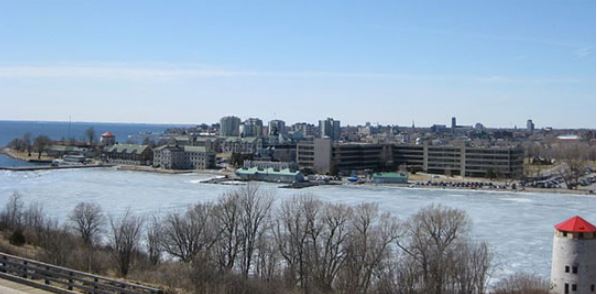
The City of Kingston, ON wanted to create a sustainability plan with a difference. City staff felt that to truly work, sustainability had to be an idea that is owned not just by city staff and council, but by the community as well.
The idea of community ownership drove much of the discussion around the plan. In the end, there are three-prongs to Kingston's "community-owned" plan. There is the plan itself; a website that — among other things — lays out a set of best practices for individuals, businesses and organizations to follow; and the creation of an arms-length governing body that will drive sustainability forward in Kingston.
Results
Environmental
Economic
Social
A best practices website
Creation of an arms-length governing body to drive sustainability forward in Kingston
Reduce and/or mitigate GHG emissions to become carbon neutral
Establish Kingston as a leader in green energy - wind, solar, biofuel
Become a hub for research and development companies
Support and implement green procurement policies
Reduce reliance on food bank usage
Support the inclusion of affordable housing in new developments
Increase opportunities for those who wish to age-in-place
Challenges
How to make concrete the idea of "community ownership" of a sustainability plan
Getting buy-in from council on the idea of an arms-length body being responsible for sustainability
Lessons learned
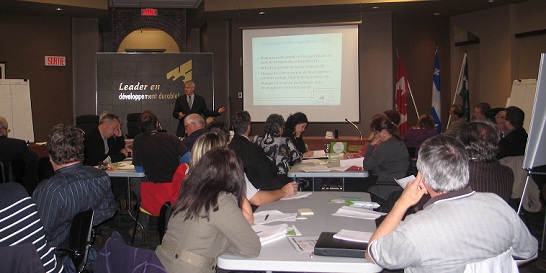
Invitation-only meetings were key to making the idea of community ownership concrete
Don't underestimate the importance of buy-in from politicians and staff in the process
Paul MacLatchy
Director, Environmental and Sustainable Initiatives
Kingston, ON
T. 613-546-4291
Want to explore all GMF-funded projects? Check out the Projects Database for a complete overview of funded projects and get inspired by municipalities of all sizes, across Canada.
The City of Rivière-du-Loup, QC has prioritized economic, environmental and social development in the community. To chart a course for its future, the city prepared a long-term sustainable development plan based on The Natural Step planning framework. Its goal was to build an integrated community plan that will unfold over 40 years.
The city also wanted to ratify its municipal policies and review its zoning bylaws. The plan was developed in five stages: create a vision, assess the current situation, pinpoint areas for improvement, implement the plan, and follow up.
Other Canadian municipalities, especially those that are similar to Rivière-du-Loup, can learn from this exercise and use it as a basis for their own plans.
Results
Environmental
Economic
Social
More green space and natural areas that are accessible to residents
Responsible use of natural resources (energy, water, air, soil) to ensure their sustainability
The local economy is bolstered by the city's investment in diversity, innovation and sustainability
A healthier economy results from responsible production and consumption
A united community that shares a common vision
An improvement in overall quality of life for residents
Challenges
A lack of funds hampered progress and added to the timeline, which discouraged some stakeholders.
The municipal council had to share some decision-making power with various public interest groups.
Lessons learned
Public consultation slows the process down, but is essential for both the successful rollout and long-term implementation of the plan.
Using outside expertise and having someone work full-time on the project proved to be important because too long a process can discourage stakeholders.
Council must be absolutely committed to the process.
Éric Côté, Director
Service de l'environnement et du développement durable
City of Rivière-du-Loup, QC
T. 418-867-6663
Want to explore all GMF-funded projects? Check out the Projects Database for a complete overview of funded projects and get inspired by municipalities of all sizes, across Canada.
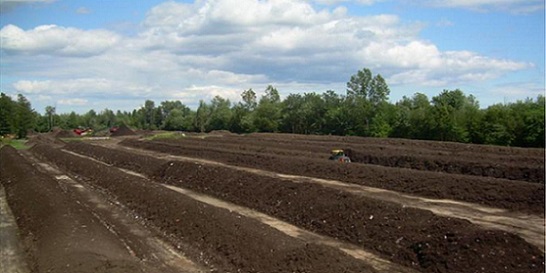
The City of St-Jean-sur-Richelieu studied the feasibility of using municipal sewage sludge as agricultural fertilizer.
Every year, the municipal wastewater treatment plant trucks 11,000 tonnes of biosolids to a landfill more than 100 kilometres away. After field tests, the study team gave a thumbs-up to spreading the sludge on land. The study showed that an open-air composting site would have to be built to treat the biosolids during winter and rainy periods. Ideally, the bulking agent added to the sludge would be organic waste from household collection.
Spreading municipal biosolids on agricultural lands is a solution that has financial benefits for farmers and the municipality, and is good for the environment.
Results
Environmental
Economic
Social
13,000 tonnes of GHG emissions avoided annually by not landfilling sludge
Other environmental impacts of truck traffic reduced
The project costs $457,000 per year less than landfilling sludge
Farmers benefit from an estimated $120,200 worth of fertilizer per year
Field tests showed that there would not be unpleasant odours
The project will create at several permanent jobs and contribute to the local economy
Challenges
Devising a composting and/or storage scenario for winter, when biosolids cannot be transported directly to farmers' fields.
Overcoming the public's discomfort with the idea of spreading sewage sludge on land.
Lessons learned
During winter, composting is preferable to simple storage because it brings biosolids to maturity sooner and improves their physical characteristics.
Field tests were important in showing that the project would not have negative impacts like unpleasant odours.
The proximity of vast agricultural areas is a big part of what made this project economical.
Want to explore all GMF-funded projects? Check out the Projects Database for a complete overview of funded projects and get inspired by municipalities of all sizes, across Canada.
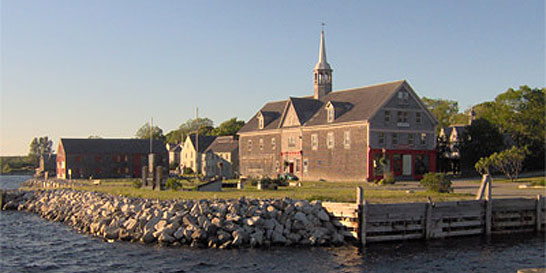
The Municipality of the District of Shelburne studied the feasibility of building a local waste transfer station to reduce the costs and environmental impact of trucking waste to a landfill in another municipality.
Under a shared service agreement, the district also provides collection and disposal for the Town of Shelburne and the Town of Lockeport. Once filled, the curbside collection trucks, better suited to short hauls, make a three-hour return trip to the landfill. A transfer station would allow specially-designed long-haul trucks to make the trip to the landfill.
Building a waste transfer station would reduce fuel consumption. It would, however, provide economic benefits only if two neighbouring municipalities (the District of Barrington and the Town of Clark's Harbour) participated in the project.
Results
Environmental
Economic
Social
Fuel consumption from truck travel to and from the landfill would be reduced by about one-third
The transfer station system would be cost-effective if five municipalities participated
An awareness campaign to promote separation of recyclable and compostable waste would further reduce landfill use
Challenges
Finding a suitable location for a waste transfer station.
Estimating financial savings in the face of changing energy prices.
Familiarizing outside consultants with the needs of the rural community.
Lessons learned
Engage staff in the early stages of any feasibility study.
Make sure all quantities included in the analysis, such as amount of fuel used, are adequately researched.
Make sure that the process for evaluating the technical and economic feasibility is defined clearly and early.
Use the skills of the steering group.
Want to explore all GMF-funded projects? Check out the Projects Database for a complete overview of funded projects and get inspired by municipalities of all sizes, across Canada.
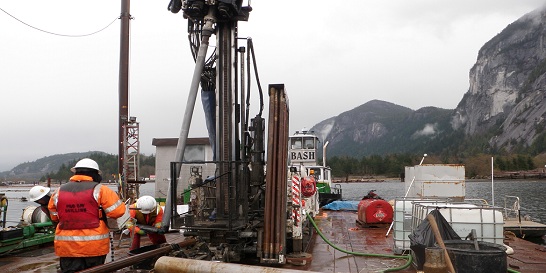
To reduce economic and environmental costs, the District of Squamish tested sediment in a nearby ocean channel for use as fill in a major waterfront redevelopment project.
If safe, sediment from the Mamquam Blind Channel would be a convenient source of filling to develop a park in a project by Squamish Oceanfront Development Corp. The project would transform a former 59-acre industrial site into a peninsula of neighbourhoods, parkland and beaches.
The sediment passed the purity tests, avoiding the need for 20,000 truckloads of material to be delivered from a site 15 kilometres away. It provides an environmentally friendly, less costly source of clean fill for the new development.
Results
Environmental
Economic
Social
230,000 m3of trucked-in fill replaced by safe-for-use ocean sediment near the site
300,000 km of GHG-generating truck travel avoided
Sediment will form a clean cap over contaminated soil in former industrial site
Using sediment as fill eliminates trucking costs
Project site provides a place for sediment that must be dredged periodically to keep the channel navigable
New park will encourage tourism, recreation, commerce and economic development
7.5-acre park will be created with sediment fill
A waterfront community will be developed with ample space for arts and cultural activities, sports and recreation, and a marina
Challenges
Assuring sediment was free of mercury and hydrocarbon contamination from an old chlor-alkali processing plant.
Finding staff time for up to 70 hours of work in writing grant applications and reports.
Lessons learned
Review reports and interview former occupants of test sites to identify areas of potential contamination.
Where possible, use divers, not barge-based drill rigs, to collect sediment samples. They cost less and are more flexible.
Costly anti-pollution checks are worth the money; they clear the way for profitable economic redevelopment.
Heather Dunham
Manager, Squamish Oceanfront Development Corp.
District of Squamish, BC
T. 604-815-5075
Want to explore all GMF-funded projects? Check out the Projects Database for a complete overview of funded projects and get inspired by municipalities of all sizes, across Canada.
To give itself new opportunities and a new look, the Town of Fort Erie drafted a brownfield revitalization plan that offers developers tax and other incentives to clean up and redevelop more than 250 acres of vacant, abandoned, and possibly contaminated industrial sites.
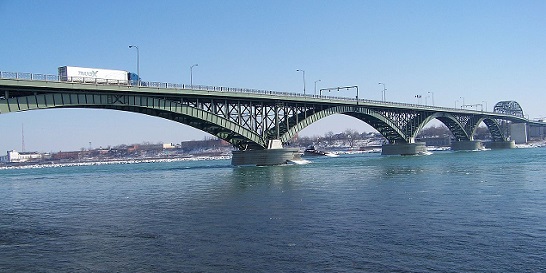
The town, connected to Buffalo, New York, by the International Peace Bridge over the Niagara River, was once a bustling commercial centre, home to aircraft and chemical factories, steel plants and lumber yards. Now manufacturing has given way to a tourism and service economy, leaving the urban landscape studded with unsightly scenes of industrial dereliction.
To rectify this, the town commissioned studies on brownfield remediation and the economic, environmental and social benefits that would flow from it. Then it adopted a plan that will not only provide financial incentives for private redevelopment but also encourage the town itself to lead the way by reclaiming and rebuilding brownfield sites it owns.
Results
Environmental
Economic
Social
Redevelopment tax breaks are tied to energy-efficient building standards
Brownfield remediation decontaminates soil, stops water pollution
$1.2 million increase in property tax revenue from redeveloped brownfields
600 new jobs from cleanup and redevelopment work
Reclaimed brownfields reduce urban sprawl, provide space for new housing
Brownfield redevelopment creates more attractive, liveable neighbourhoods
Challenges
Convincing skeptical property owners and developers that tax and grant incentives are rich enough to make brownfield remediation and redevelopment profitable.
Convincing skeptical ratepayers that tax holidays and breaks for brownfield developers will generate higher tax revenue in the future.
Spurring development in a town with a limited economic base.
Lessons learned
Allow ample time to review draft reports from consultants to keep the process moving expeditiously.
Be prepared for pressure before the plan is finished from investors and sellers looking to know how remediation incentives might affect business deals.
Public information meetings help generate investor interest in brownfield cleanup work.
David Heyworth
Senior Policy Planner
Fort Erie, ON
T. 905-871-1600 ext. 2504
Want to explore all GMF-funded projects? Check out the Projects Database for a complete overview of funded projects and get inspired by municipalities of all sizes, across Canada.
The City of Kamloops evaluated the extent of soil and groundwater contamination on a portion of the municipally-owned site of the former provincial Rayleigh Correctional Centre. Previously a Department of National Defence munitions depot, the site had also been used for waste oil drum and coal storage, an incinerator, a fire pit and a landfill.
The study identified contaminants in 5,000 cubic metres of soil and outlined a remediation plan. The contaminated soil was used for road construction, buried on site or removed. Sampling determined that the groundwater did not require remediation, as its quality was comparable to water elsewhere in the valley.
The city built the Tournament Capital Ranch on the site in 2011. It features eight baseball diamonds and two rugby fields. Future development may include an exhibition/agri-plex building and equestrian facilities. The Tk'emlups First Nation is making plans for an RV park, and a portion of the land has been retained for agricultural use.
Results
Environmental
Economic
Social
5,000 m3 of soil remediated
80 ha of land remediated
300,000 honey bees successfully relocated
Habitat along North Thompson River protected
44 ha of land available for agricultural use
Potential development of exhibition/agri-plex and equestrian facilities
RV park planned by Tk'emlups First Nation
Weekly tournaments drawing hundreds of spectators and participants
Gathering place for agricultural exhibitions
5 km of walking paths
Opportunities for health-promoting recreational activities
Challenges
The city found munitions-related debris from the World War II era. Removal of this material required the involvement of the Department of National Defence and the Canadian Forces.
Additional work was required to meet stringent agricultural and water-quality standards.
Provincial Ministry of Environment standards, guidelines and regulations changed during the project.
Some waste was deemed hazardous and had to be taken to a more distant landfill at additional cost to the city.
Lessons learned
Allocate time and resources for unanticipated issues, particularly with large, complex projects.
Deal with issues as they arise, and don't take short-cuts.
Ensure that all stakeholders-including city council, senior management, staff, project team members and the public-understand the remediation process.
Work with local consultants to reduce travel costs and provide flexibility for the project team.
Use city staff for tasks such as soil removal, to save time and money.
Want to explore all GMF-funded projects? Check out the Projects Database for a complete overview of funded projects and get inspired by municipalities of all sizes, across Canada.