


Case study: Expanding tree canopy on public and private land
Learn how the City of Medicine Hat is meeting its canopy targets through community-supported tree planting
 TREES
The City of Medicine Hat, AB, is working toward its urban canopy target and enhancing tree equity by planting trees throughout the city with community support.
Summary
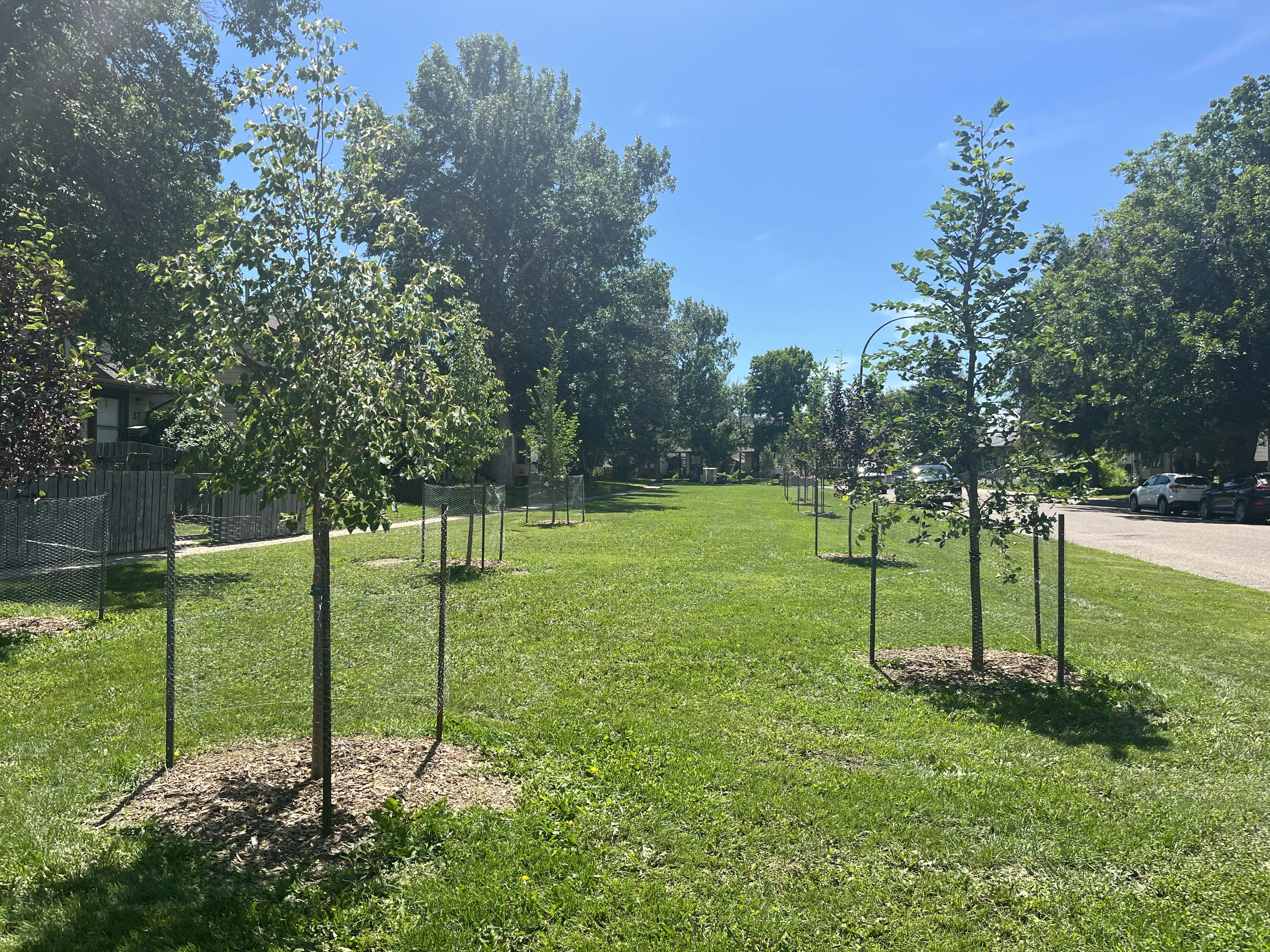
To move closer to its goal of a 13 percent tree canopy cover, the City of Medicine Hat has begun a three-year project to plant a total of 6,705 trees on both public and private land with the support of schools and residents. Sites and species have been selected to maximize biodiversity and minimize maintenance, and a locally tailored watering program will help trees survive in the dry prairie climate.
Background
The City of Medicine Hat in southeastern Alberta is located in Treaty 7 territory, on the traditional lands of the Ĩyãħé Nakón mąkóce, Michif Piyii, Niitsípiis-stahkoii, Očhéthi Šakówiŋ and Nêhiyaw-Askiy nations, and beside Treaty 4 territory. It sits within the Palliser Triangle, a notoriously dry part of the country that often faces droughts, making trees both harder to establish and maintain and in high demand for their cooling and shade-providing abilities.
To improve quality of life for residents, the City is aiming to make canopy distribution more equitable across neighbourhoods and to increase its current 7.62 percent canopy coverage to 13 percent by 2076, a task that will include replacing existing trees that are declining or at end of life. Since even mature trees need to be watered in this region during droughts, the City is particularly focused on choosing drought-resistant species and locations where water is available in order to improve tree survivability.
The goal
As part of its efforts to increase urban forest canopy, the City has begun a three-year initiative: each year, they will plant 800 trees across 45 different public sites as well as 1,435 trees on private land, the latter in part through a program with local schools aimed at boosting community participation and understanding of the value of urban trees.
The approach
The City used GIS data to select sites on public land, taking into account:
- existing canopy
- soil moisture
- the presence of utility lines
- resident views and sightlines
- any need or desire for shade, such as in playgrounds
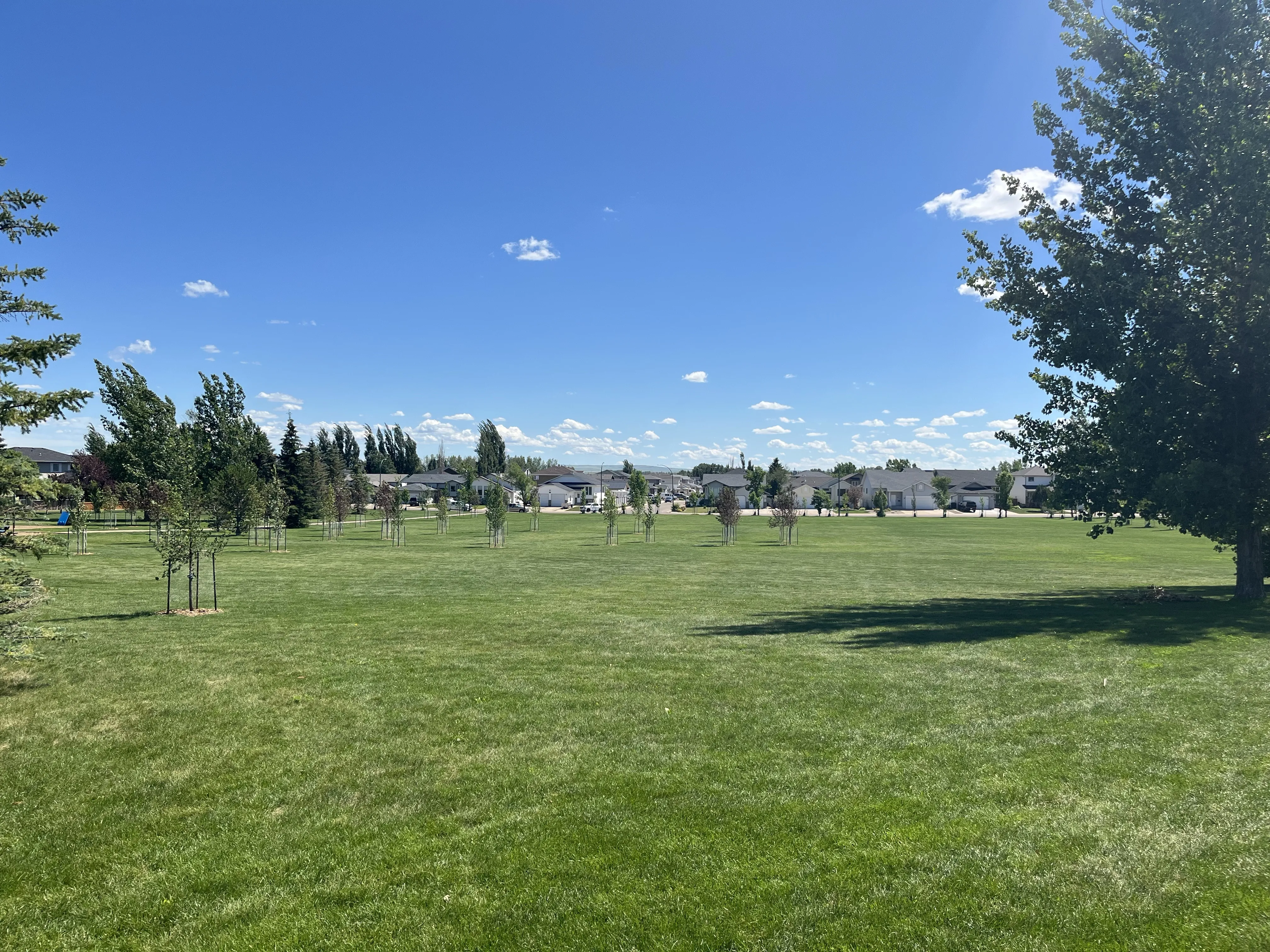
Many of the trees being planted on public land will be placed in urban park spaces that are already irrigated in order to minimize additional staff time required for watering, especially beyond the fifth year after planting.
For private land, the City is partnering with local schools to help students learn about the urban forest, a program that includes the option of planting a City-provided tree at home. These students and other participating community members will receive emails sharing tips on tree care and maintenance.
Staff have worked with local nurseries to choose trees that are suited for the region and meet the City’s goal of diversifying the canopy. These include burr oak, known to be drought resistant once established, and a hardy ornamental chokecherry. In order to help more trees survive, they are implementing a new, locally tailored watering program that involves deep-root sub-surface watering via a metered soil probe on a prescribed schedule across multiple years, beginning with weekly watering in year one and tapering to monthly watering in years three and beyond. The water truck operator will also inspect trees to identify any issues as early as possible.
The impact
By the end of the three-year program, the goal is to plant a total of 6,705 trees, with a target survival rate of 90 percent after year one and 80 to 85 percent after year five.
The project as a whole will have a number of benefits for the City and its residents, including:
- energy conservation
- improved shade
- improved air quality
- slower flow of rainfall into water collection systems
The project will also improve knowledge about the importance of urban forests among community members, in particular participating students.
Lessons learned
Some community members have shared concerns about program costs and about their desire to maintain open spaces in parks. This shows the importance of community engagement when it comes to site selection and of communicating the value of investing in the urban forest.
The original goal was to have students in grades 4 and 5 plant 1,435 trees per year at home as part of an urban forest learning program. This number was selected based on the total number of local students in this cohort; however, it didn’t take into account the fact that not all families have the space, land or inclination to plant a tree at home.
Student participation was under target in the first year, so staff pivoted to offering remaining trees to students in all grades and then to the community at large, demonstrating the importance of having backup plans to make use of purchased stock and ensure trees on private land are planted by people motivated to care for them. In fact, the tree giveaway program was so popular that people were lined up for hours and the entire stock was gone in a day.
Next steps
The municipality has consulted with schools and revised the public-engagement program for the next two years. It will include only grade 4 students (about 700 children) and feature better communication with families on the quality of the trees available as well as a deadline to sign up. Remaining trees will be offered to the community at large via an online registration system with pickup windows for more streamlined distribution.
On public sites, initial site preparation and planting has taken place and staff continue to work to meet project targets.
The City plans to assess planted trees regularly to identify and tally any dead or dying trees so that they can measure success and offset any losses with additional plantings, continuing to move closer to their goal of a 13 percent canopy.
"The people that developed Medicine Hat in the early 1900s planted trees for the next generation. Now it’s our turn to give back.” – Orlando Whetter, Manager of Parks, City of Medicine Hat


The Green Municipal Fund's Growing Canada’s Community Canopies is a $291 million initiative, ending in 2031, funded by the Government of Canada and delivered by the Federation of Canadian Municipalities. Capacity building is enabled through a partnership with Tree Canada. GCCC will support the planting of at least 1.2M trees across Canada by end of March 2031.
Related resources
Create a tree planting plan
Six key resources you need to plant new trees effectively.
Webinar recording: The business case for planting trees
Learn why trees are one of your community’s smartest investments.
Factsheet: Site selection and preparation
Ensure you plant trees where they can survive and help your community thrive.
Guide: Create a tree planting plan for your community
Access best practices backed by research and real-life examples.
Template: Tree planting plan
Set clear goals, track progress and maximize your project’s impact.
Template: Create a tree maintenance and monitoring plan
Support healthy tree growth, track progress and respond to challenges over time.
Factsheet: Make the case for trees in your community
Present the economic, environmental and social benefits of your project to council and community partners.
Want to explore all GMF-funded projects? Check out the Projects Database for a complete overview of funded projects and get inspired by municipalities of all sizes, across Canada.
Related Projects
See All Municipal buildings